
GLP-1 Medications and Bone Health

What Should You Know?
GLP-1 medications such as Ozempic® (semaglutide), Mounjaro® (tirzepatide), and Wegovy® (semaglutide) have become increasingly popular to help people lose weight and improve blood sugar control. While these medications can provide significant metabolic benefits, researchers are now taking a closer look at how rapid weight loss and GLP-1 therapies may affect bone health. Weight loss can improve many aspects of health, but it can also impact the skeleton. As body weight decreases, bones experience less mechanical loading, which may contribute to reductions in bone mineral density (BMD) over time.
Why Weight Loss and Bone Health Are Connected
Bone is not a static structure. It constantly remodels itself in response to the mechanical demands placed on it — a principle known as Wolff’s Law. When you carry more body weight, your bones experience greater load and respond by maintaining or building density. When that load decreases — as it does with significant weight loss — bones receive less stimulus to maintain their mass, and density can decline.
This effect is not unique to GLP-1 medications. It has been observed with weight loss surgery, very low calorie diets, and other approaches that produce rapid reductions in body weight. The concern with GLP-1 medications is that they can produce substantial weight loss relatively quickly, and emerging research suggests the effect on bone may go beyond mechanics alone.
What the Research Found
Two key studies have brought this issue into focus.
Study 1: Exercise makes a significant difference
A 2024 clinical trial published in JAMA Network Open split weight loss patients into three groups for one year: exercise only, GLP-1 medication only, or GLP-1 medication plus exercise. Researchers then measured bone density at the hip and spine.
- GLP-1 medication alone → bone density declined at the hip and spine
- Exercise alone → bone density was preserved while still losing weight
- GLP-1 medication plus exercise → greatest weight loss AND preserved bone density
The takeaway: exercise isn’t optional when you’re on these medications — it’s preventive.
Study 2: Bone breakdown increases without new bone forming
A separate systematic review in Medicina looked at GLP-1 therapy across multiple studies and found that after 52 weeks, patients showed higher markers of bone breakdown — but no increase in new bone formation to compensate. The skeleton was losing more than it was building.
The Muscle Loss Factor
GLP-1 medications suppress appetite significantly, which makes it hard to consume enough protein. When weight loss happens in a low-protein environment — especially without resistance exercise — a disproportionate amount of what you lose comes from muscle, not fat.
Why muscle matters for bone:
- Muscle contraction applies direct mechanical force to bone
- That force signals bone to maintain density and strength
- Less muscle means less stimulus — and bone responds by breaking down faster
Losing muscle while losing weight compounds the problem. It removes one of the most important signals bone relies on to stay strong, on top of the reduced load from carrying less body weight.
This is why the research showing exercise preserves bone density during GLP-1 therapy is so significant. It is not just about burning calories — it is about maintaining the mechanical stimulus that keeps bone remodeling in balance.
Who Is Most at Risk
Not everyone on a GLP-1 medication faces the same level of bone health risk. The concern is greatest for:
- Postmenopausal women, who are already experiencing accelerated bone loss due to declining estrogen and have less bone density to spare
- Adults over 60, for whom bone loss and fracture risk are already elevated
- Anyone with existing osteopenia or osteoporosis, for whom additional bone loss could significantly increase fracture risk
- People losing weight rapidly — the faster the weight loss, the more pronounced the skeletal response tends to be
- Those not doing regular weight-bearing or resistance exercise during their medication course
If you fall into any of these categories and are taking or considering a GLP-1 medication, a baseline bone health assessment before starting — and monitoring during treatment — is essential in maintaining your skeletal health.
What You Can Do About It
GLP-1 medications can be highly effective — and the research is clear that their impact on bone health is manageable when you take the right steps alongside them.
Exercise — specifically resistance training. The JAMA study was unambiguous: exercise preserved bone density in GLP-1 users. Weight-bearing and resistance exercise should be considered a non-negotiable companion to these medications, not an optional add-on.
Prioritize protein. Aim for adequate daily protein intake to support muscle preservation during weight loss. This becomes especially important when appetite suppression makes eating feel effortful. Working with a provider on a nutritional strategy alongside your medication is worth the time.
Monitor your bone health. A baseline scan before starting a GLP-1 medication — and a follow-up scan after 12 months — gives you real data on what is happening to your skeleton. This is especially important if you are postmenopausal, over 60, or have any existing bone health concerns.
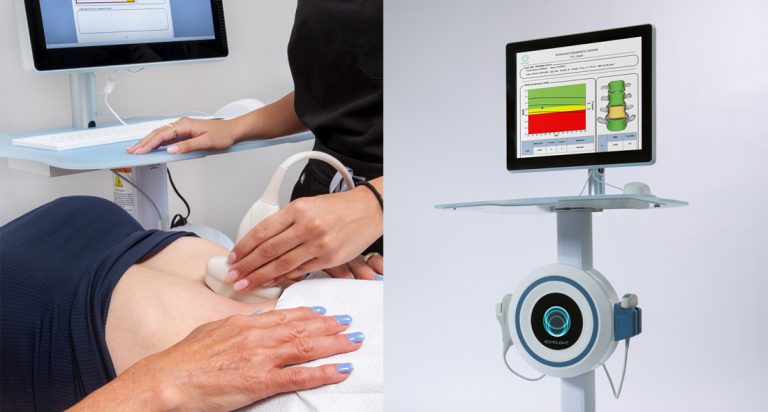
At OsteoSmart, we use the Echolight® REMS scan, which measures both bone density and bone quality without radiation. If you are on a GLP-1 medication and have never had your bone health formally assessed, a complete evaluation is a straightforward and informative place to start.
Related Posts
References
Jensen SBK, Sørensen V, Sandsdal RM, et al. Bone Health After Exercise Alone, GLP-1 Receptor Agonist Treatment, or Combination Treatment: A Secondary Analysis of a Randomized Clinical Trial. JAMA Netw Open. 2024;7(6):e2416775. doi:10.1001/jamanetworkopen.2024.16775
Daniilopoulou, I., Vlachou, E., Lambrou, G. I., et al. The Impact of GLP1 Agonists on Bone Metabolism: A Systematic Review. Medicina (Kaunas, Lithuania), 58(2), 224. https://doi.org/10.3390/medicina58020224