
What Genetics Really Mean For Your Bones
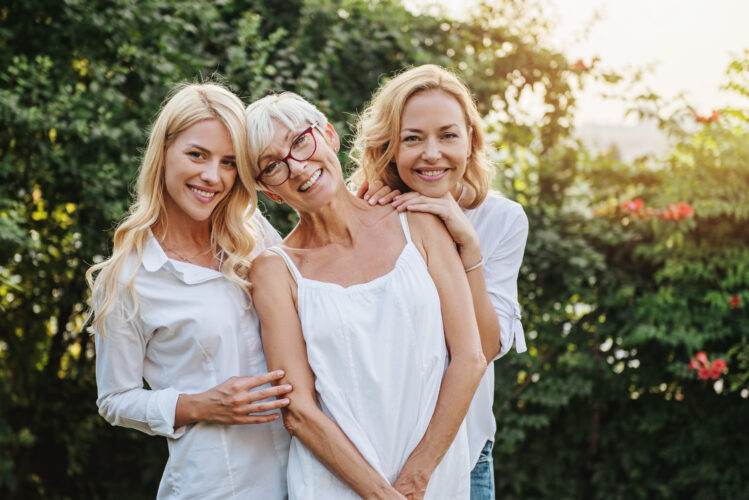
Family History Isn’t Destiny
Just because your mother had osteoporosis doesn’t mean you will. That’s not wishful thinking — it’s what the research actually shows.
Family history is one of the most significant risk factors for osteoporosis. If your mother or grandmother lived with it, your own risk is genuinely higher, and that’s worth taking seriously. But a higher risk is not a settled outcome. Where you start is not the same as where you’ll end up — and a surprising amount of that difference is shaped by choices you can make.
What the Research Actually Shows
Studies of bone mineral density — the measure at the center of a bone health assessment — consistently find that genetics account for roughly 60 to 80 percent of the variation in bone density from one person to the next. A large twin study put the heritability at somewhere between 0.61 and 0.84 depending on the site measured, which is another way of saying the same thing: most, but not all, of the variation is inherited.
That number can sound discouraging at first. Look closer, though, and it points the other way. If genetics explain 60 to 80 percent, then 20 to 40 percent of your bone health outcome is shaped by behaviors and choices within your control. For someone with a family history, that slice is not a footnote — it’s the part of the equation you get to write yourself.
What Actually Moves the Needle
The good news is that the levers with the most evidence behind them are also the ones most within reach. Four stand out.
Exercise that challenges your bones. Bone is living tissue that responds to demand. Resistance training, impact movement, and activities that put meaningful stress on your skeleton send a direct signal to maintain and build density. Think weight training, resistance bands, stair climbing, dancing, jogging, jump training, or hiking and walking with a weighted vest. This is one of the most powerful things you can do for your bones regardless of your genetics.
Nutrition that supports bone remodeling. Calcium, vitamin D3, vitamin K2, magnesium, boron, and other key minerals work together as a system rather than in isolation. Vitamin D3 is essential for calcium absorption, and boron helps your body retain and use it more effectively. Vitamin K2 helps direct calcium toward your bones rather than your arteries. Together, these vitamins and minerals give your body the raw materials it needs to keep bone strong.
Monitoring that catches change early. Bone loss is silent. There are usually no symptoms at all until a fracture happens — which is exactly why waiting for a warning sign is the wrong strategy. Regular assessments that look beyond density alone to include bone quality, architecture, and fracture risk give you real information to act on before a problem takes hold. At OsteoSmart, that’s the role our radiation-free REMS bone scan plays: it measures not just how dense your bones are, but how strong they actually are, so you can see where you stand today and track genuine change over time.
Awareness that you’re at higher risk. This one sounds almost too simple, but it changes outcomes on its own. People who know their family history and take it seriously tend to get assessed earlier, adjust their habits sooner, and work with their physician proactively rather than reactively. Knowing is the first move — everything else follows from it.
Your Genetics Set the Starting Line, Not the Finish
If osteoporosis runs in your family, that history deserves your attention. But it doesn’t have to become your story, especially if you get ahead of it.
Family history tells you where you might be starting from. What you do next — how you move, how you nourish your bones, and how closely you keep an eye on them — helps write the rest. If you’d like to know where your bones stand right now and build a plan around it, we’re here to help. Call (331) 244-1102.
References
Nethander M, et al. “Strong Genetic Effects on Bone Mineral Density in Multiple Locations with Two Different Techniques: Results from a Cross-Sectional Twin Study.” Medicina, 2021;57(3):248.
https://www.mdpi.com/1648-9144/57/3/248
Ralston SH, Uitterlinden AG. “Genetics of Osteoporosis.” Endocrine Reviews, 2010;31(5):629–662.
https://academic.oup.com/edrv/article-abstract/31/5/629/2354751
This article is for educational purposes only and does not constitute medical advice. Always consult with your physician before making changes to your care.