
Genetics & Osteoporosis

Genetics play an important role in bone health, especially when it comes to your risk of developing osteopenia or osteoporosis.Your genes help determine how much bone you build early in life, how strong that bone structure is, and how quickly bone loss may occur as you age. For some people, this means bone loss can begin earlier and progress more quickly, even before symptoms appear.
Family History:
If a parent or grandparent was diagnosed with osteopenia or osteoporosis, or experienced fractures from minor falls, your inherited risk may be higher. Bone density and bone structure are strongly influenced by genetics, which is why osteoporosis often runs in families.
Ethnicity:
Research shows that Caucasian and Asian women tend to have a higher risk of osteoporosis. African American and Hispanic women often have higher average bone density, but they are still at risk — especially when other factors such as family history, menopause, certain medications, low activity level, or nutritional deficiencies are present.
Gene Variants:
Certain gene variations influence how efficiently your body uses calcium, vitamin D, and other nutrients that support bone strength. Other gene variants affect how quickly bone is broken down and rebuilt. When bone loss happens faster than bone rebuilding, bone density and bone strength can gradually decline.
Research shows that up to 80% of peak bone mass is influenced by genetics which helps explain why osteoporosis can run in families.
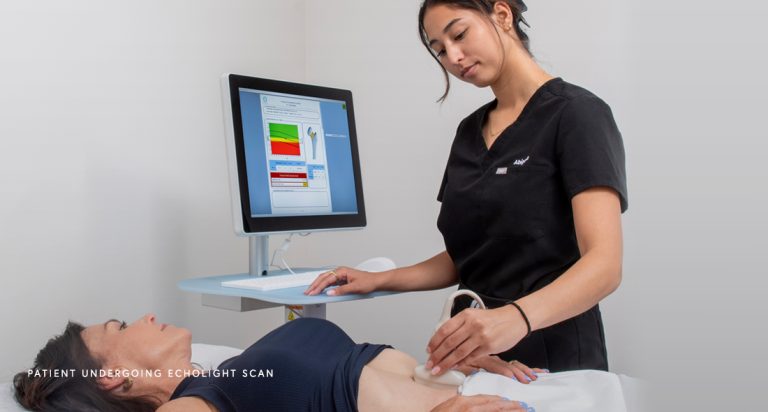
At OsteoSmart, we offer the Echolight® REMS bone scan, a radiation-free scan that provides the most comprehensive view of your bone health. Because it uses no radiation (unlike DEXA), it is especially suited for establishing a baseline earlier in life and for monitoring bone health over time when needed.
If osteoporosis or fractures run in your family, or if you want a clearer understanding of your bone health today — give us a call — early screening can make a meaningful difference.